Automated Parking System
Automated Parking
An automated parking system stores vehicles on mechanically operated platforms instead of on conventional ramped floors, fitting more cars into the same footprint. Prawita Karya supplies and installs automated parking systems in Indonesia.
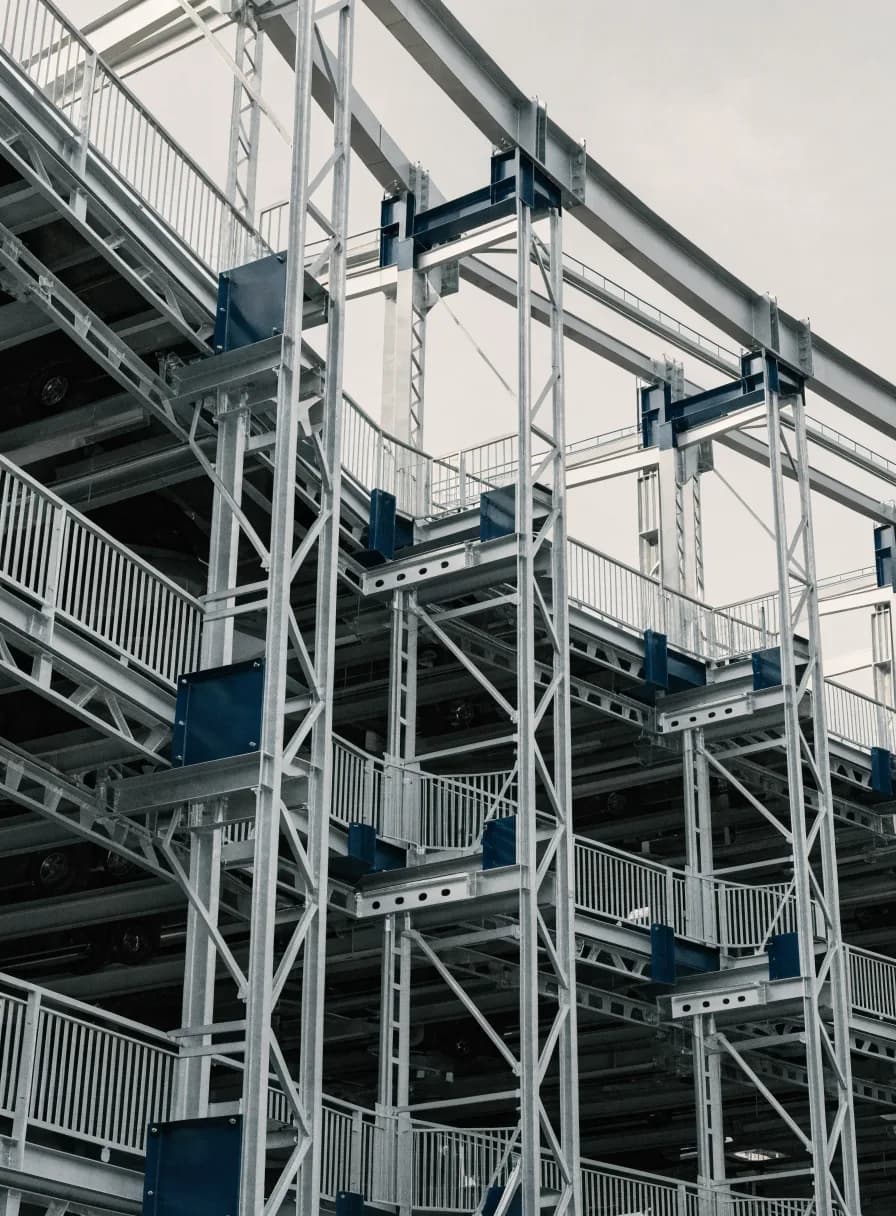
What to know about automated parking
Conventional parking spends a large share of its floor area on circulation — ramps, aisles and the clearance a driver needs to manoeuvre. An automated system removes most of that, because the vehicle is moved mechanically rather than driven to its space.
On constrained urban sites this changes what a development can achieve. Meeting a parking requirement without an automated system may mean additional basement levels, and basement excavation is among the most expensive floor area in any project.
These systems are mechanical installations under daily duty, so servicing follows the same logic as vertical transport: scheduled maintenance, genuine parts and a defined response when a fault takes a bay out of use.
Specifications
Technical data
Specifications are configured per project. Figures below are confirmed against the selected equipment during survey and specification.
- Brand
- HYTONE
- Automated
- Automated parking garage
- Puzzle
- Puzzle car parking garage
- Vertical rotary
- Vertical rotary parking system
- Simple stack
- Stack car system
Applications
Where it is used
- Constrained urban development sites
- Office and mixed-use towers
- Apartments and residential towers
- Hotels with limited basement area
- Retrofits recovering capacity from an existing structure
Why Prawita Karya
What you get
More cars per footprint
Floor area recovered from ramps, aisles and manoeuvring clearance.
Fewer basement levels
Parking requirements met without the most expensive floor area in a project.
Maintained as machinery
Scheduled servicing and genuine parts, with a defined fault response.
Projects
Related work

FAQ
Common questions
How much space does an automated parking system save?
The saving comes from removing ramps, aisles and manoeuvring clearance, so it depends heavily on the system type and the site geometry. It should be assessed against a specific site rather than assumed from a general figure.
What happens if an automated parking system fails?
Systems are designed so a fault takes individual bays out of service rather than trapping vehicles, and retrieval procedures exist for affected positions. Exact behaviour depends on the system type, which is one reason maintenance cover and response time matter when specifying one.
Specifying automated parking for a project?
Send us the building and we will help you get the specification right before it is expensive to change.