Service
Modernization
Elevator modernization upgrades an existing installation rather than replacing it entirely — typically controls, drive, doors, fixtures and safety devices, while retaining sound structural components. Prawita Karya provides full replacement, component upgrade and modular modernization.
Why modernization matters
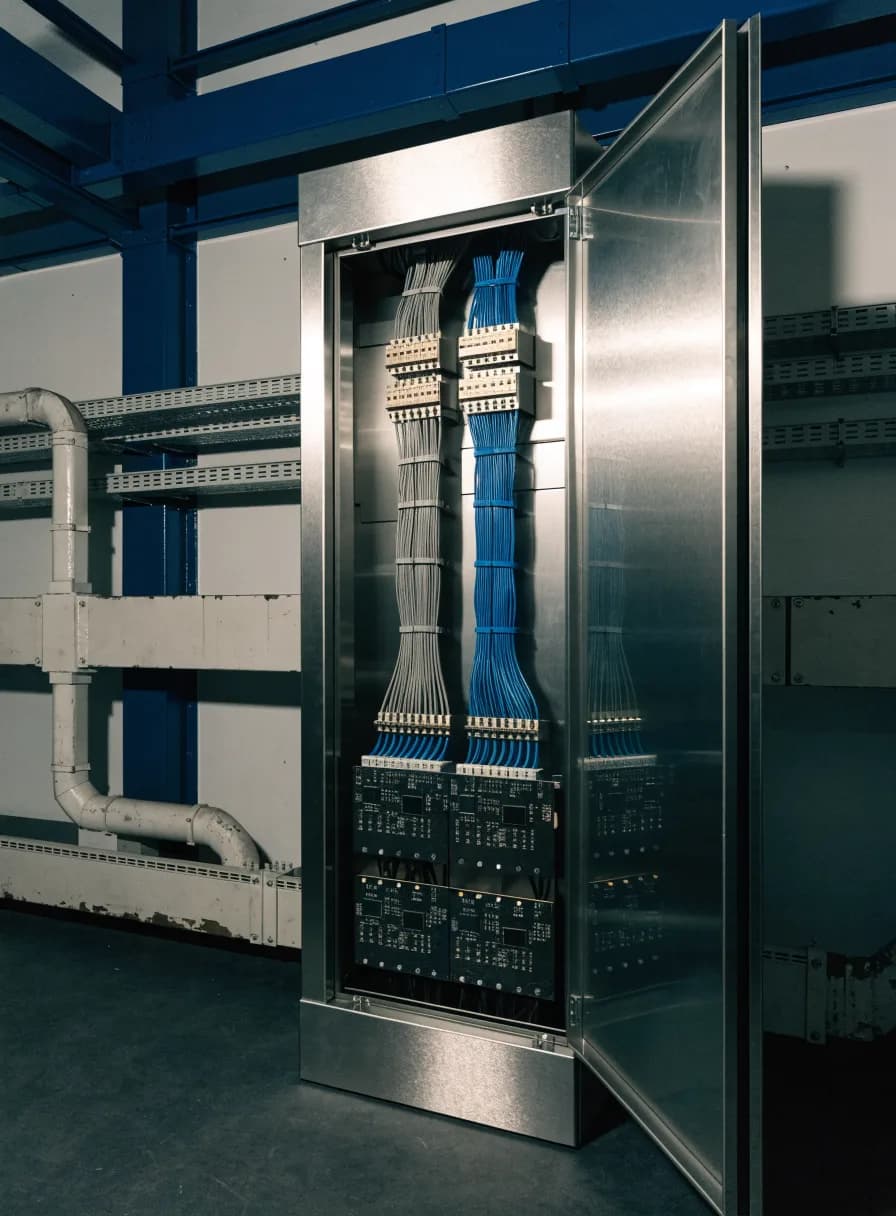
Elevators rarely wear out evenly. Guide rails and structural steel can remain serviceable for decades, while control systems reach obsolescence far sooner — often because replacement boards are no longer manufactured, not because anything has failed.
That mismatch is what modernization exploits. Replacing controls, drive and door equipment while retaining sound structure restores performance and parts availability at a fraction of full replacement cost, and with far less disruption: no shaft reconstruction, and usually a shorter out-of-service period.
The decision between modernizing and replacing turns on condition, not age. A survey establishes what is genuinely serviceable, and the answer is often mixed — which is precisely why modular modernization, staged over time, exists as an option between the two extremes.
Process
How it works
Condition survey
Existing equipment assessed component by component to establish what is serviceable.
Options appraisal
Full replacement, component upgrade or modular modernization compared for the building.
Specification
Scope defined, with performance and safety improvements identified.
Installation
Work staged to limit the time equipment is out of service.
Testing & handover
Safety devices tested and the upgraded installation commissioned.
Scope
What this covers
- Condition survey of existing equipment
- Full replacement where justified
- Component upgrade of controls, drive or doors
- Modular modernization staged over time
- Safety device upgrade to current standards
- Car interior and fixture refurbishment
Why Prawita Karya
What you get
Structure retained
Sound rails and steelwork kept, avoiding shaft reconstruction.
Parts availability restored
Obsolete control systems replaced with supportable equipment.
Staged where needed
Modular scope spreads cost and limits out-of-service time.
Products
Equipment we service
FAQ
Common questions
When should an elevator be modernized?
Common triggers are control system obsolescence and spare parts becoming unavailable, rising breakdown frequency, poor levelling or ride quality, long waiting times as building use changes, and safety devices that no longer meet current expectations. Condition matters more than age.
What is the difference between modernization and replacement?
Modernization replaces selected components — typically controls, drive, doors and fixtures — while retaining sound structure such as guide rails and steelwork. Replacement removes the entire installation. Modernization is normally faster, less disruptive and less expensive where the structure is serviceable.
How long is a lift out of service during modernization?
Less than for full replacement, and it depends on scope. Where a building has more than one lift, work can be staged so one remains available. This is a principal reason to consider modular modernization.
Need modernization for your building?
Tell us what equipment you have and where it is. Our engineers will tell you what the work actually involves.