Home Lift
Home Lift
A home lift is a compact elevator designed for private residences, sized for a small number of passengers and short travel. Prawita Karya supplies and installs home lifts across Indonesia under its own brand, Tenkai — four traction models covering 320 to 630 kg.
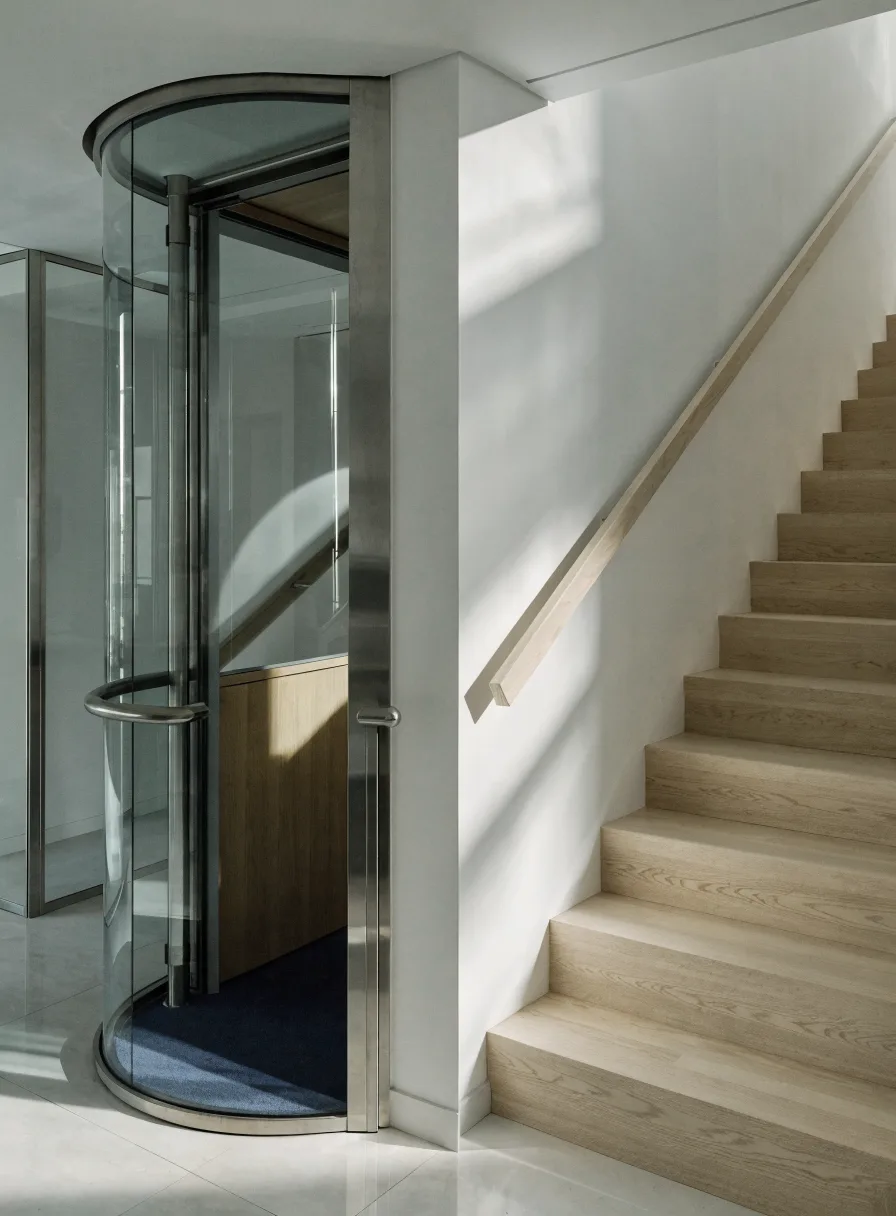
What to know about home lift
A home lift is not simply a smaller commercial elevator. It is specified for light, intermittent duty in a domestic setting, which allows a far smaller shaft footprint, shallower pit and lower headroom than a commercial installation would need. Tsuki needs a shaft of 800 × 900 mm and no pit at all — frequently the difference between a lift being possible in an existing house or not.
Every Tenkai model is traction driven. Home lifts are also built as hydraulic or screw-and-spindle systems, and both carry costs that show up after handover rather than in the quotation: hydraulic systems need regular oil maintenance and disposal, leak once seals age, and change ride speed and levelling as the oil warms; screw and spindle systems are quiet and simple but travel very slowly and wear heavily, which makes their spare parts the expensive kind. Traction costs more to install and asks for more care in doing it. It is chosen here because it wears slowly, needs no oil, and its parts stay economical.
V300 is the same lift Prawita Karya has always supplied as the SJEC V300; what is new is the badge and the drive. It now runs on the battery system SJEC calls Cube, which sits on top of the existing traction machine rather than replacing it — so the mechanical specification is unchanged and the battery is pure addition. Mains electricity only charges it. The lift keeps working through a blackout, and because charging can happen off-peak, a time-of-use tariff can cut running cost by up to 40 per cent.
Space is the other reason the range is specified the way it is. In construction, space is money: a shallower pit is less groundwork, a lower overhead removes the need for a roof deck, and a narrower shaft returns floor area to the rooms around it. The aim across the range is the same five-person capacity in a smaller hole.
Retrofitting into an existing house is usually feasible but constrained by structure. The practical questions are where a shaft can land, what the floor below can carry, and how the travel is served — which is a site survey, not a catalogue decision.
Why we built our own brand
A lift specified for the houses it goes into.
Traction across the whole range
No oil to maintain, dispose of or leak, and slow wear on economical parts. Every model in the range is traction, not hydraulic.
Specified around Indonesian houses
From a shaft of 800 × 900 mm with no pit at all. Those figures are usually what decides whether a lift is possible in a house that was not designed around one.
One contractor, survey to maintenance
Not a box shipped to a third-party installer. The team that surveys the house installs the lift and maintains it afterwards.
Specifications
Technical data
Specifications are configured per project. Figures below are confirmed against the selected equipment during survey and specification.
- Brand
- Tenkai
- Models
- Tsuki · Kaze · Mizu · V300
- Drive
- Traction (all models)
- Rated load
- 320–630 kg
- Rated speed
- 0.4 – 1.0 m/s
- Minimum shaft
- From 800 × 900 mm (Tsuki)
- Minimum pit
- From 0 mm (Tsuki)
- Power supply
- Single or three phase
The range
4 models
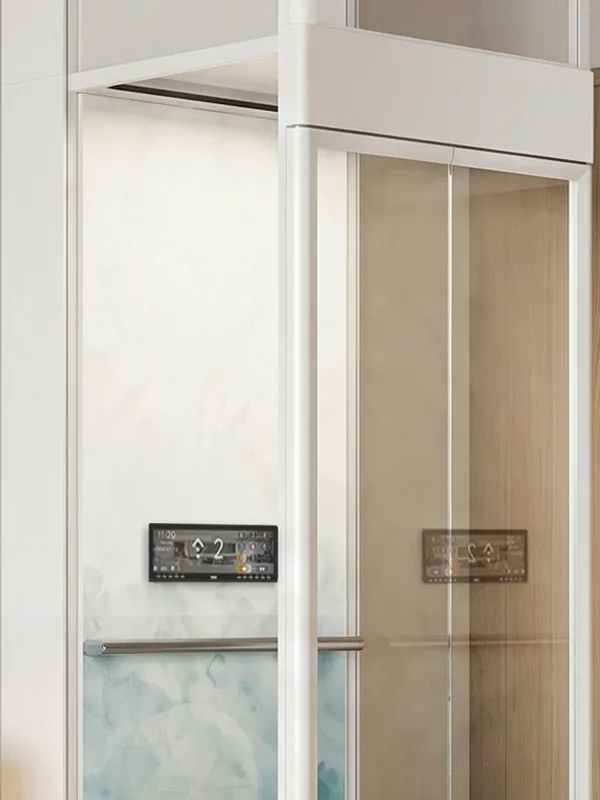
Tsuki
The narrowest shaft in the range, and the only one that needs no pit at all.
- Car type
- Cabin or platform
- Rated load
- 320 kg / 400 kg
- Rated speed
- 0.4 m/s
- Minimum shaft
- 800 × 900 mm
- Minimum pit
- 0 mm
- Minimum overhead
- 2,800 mm
- Power supply
- Single or three phase
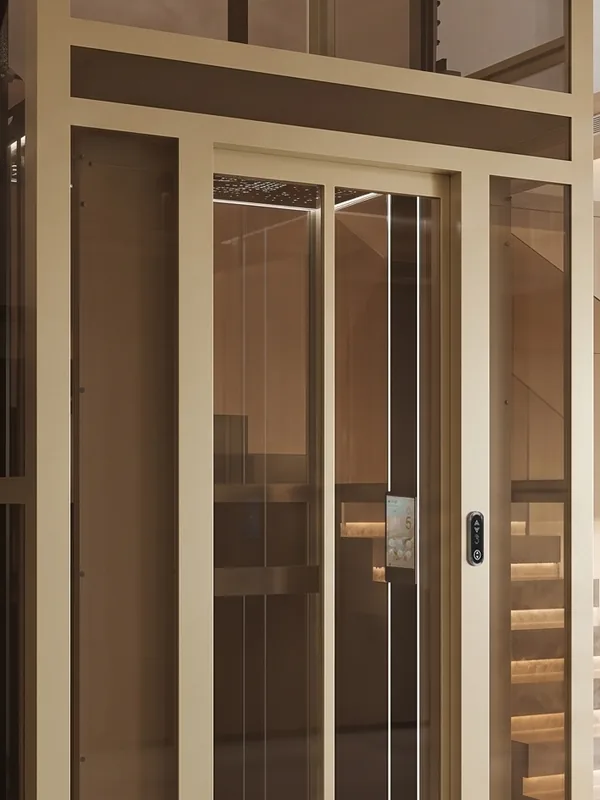
Kaze
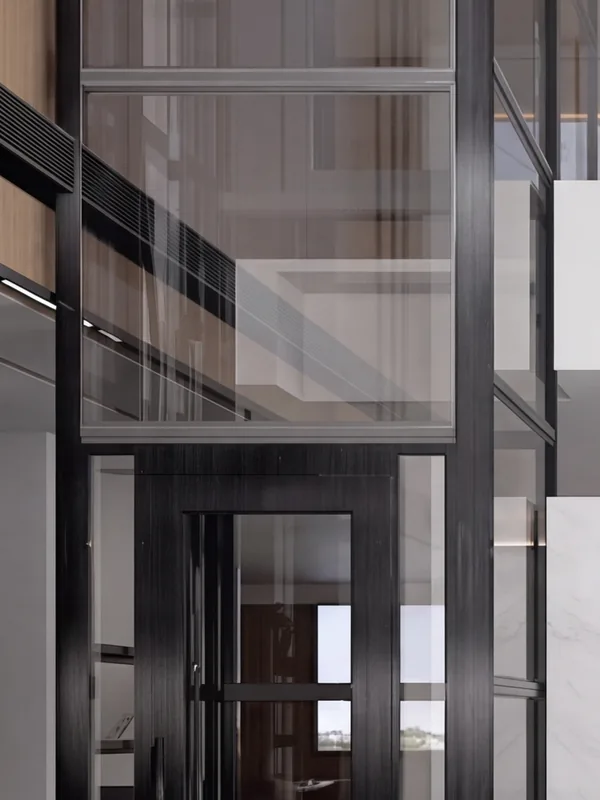
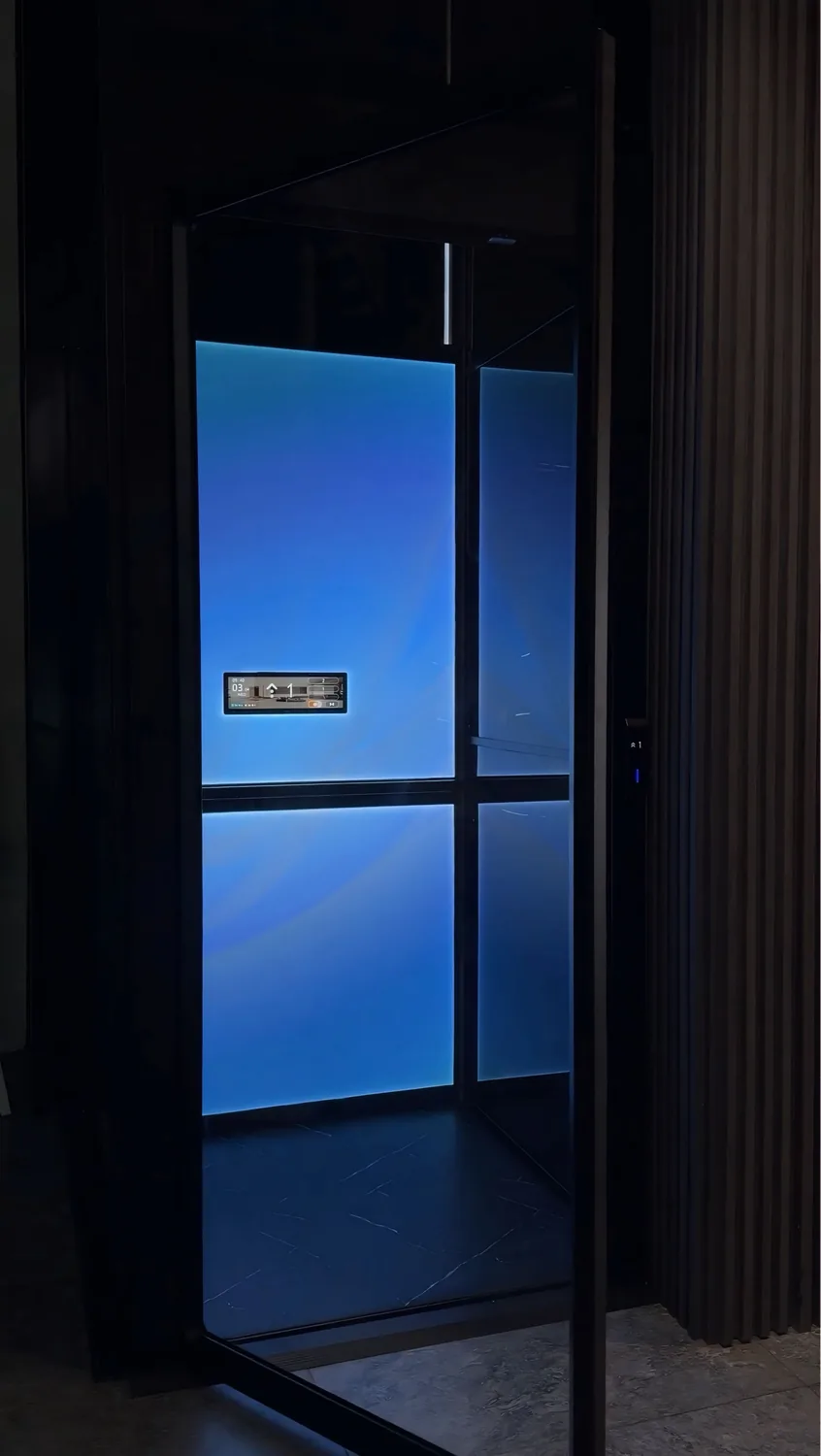
Fully glazed, and installs without additional civil construction.
- Car type
- Cabin
- Rated load
- 400 kg
- Rated speed
- 0.4 m/s
- Minimum pit
- 150 mm
- Power supply
- Single or three phase
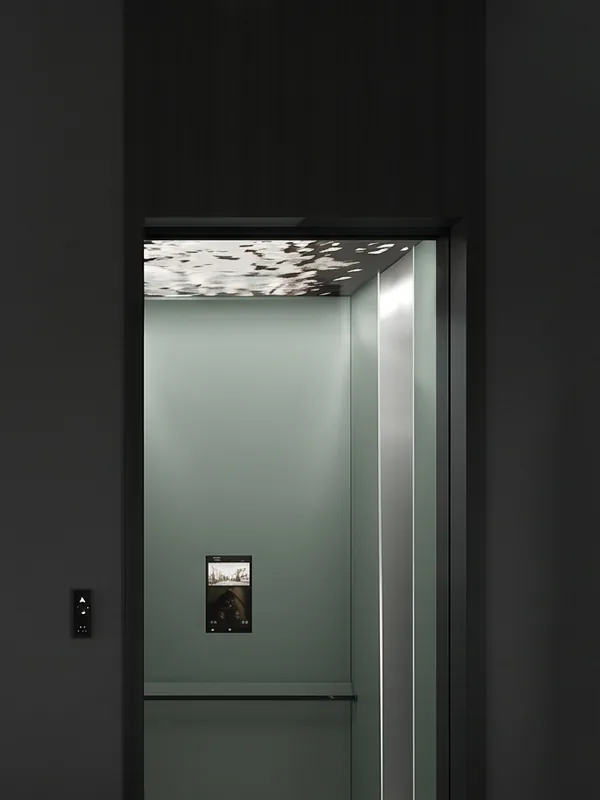
Mizu
The widest spread of capacity and speed, at the most competitive price.
- Car type
- Cabin
- Rated load
- 400 kg / 450 kg / 630 kg
- Rated speed
- 0.4 / 0.63 / 1.0 m/s
- Minimum pit
- 200 mm (150 mm with sill)
- Power supply
- Single or three phase
V300
The SJEC V300 under the Tenkai badge, now battery driven: mains power only charges it, so it keeps running through a blackout.
- Car type
- Cabin or platform
- Rated load
- 320 kg / 400 kg
- Minimum pit
- 300 mm
- Shaft width
- 850–1,400 mm
- Door opening
- 600 × 2,000 mm
- Counterweight
- Side or rear
- Machine
- Permanent magnet synchronous gearless, ~1.1 kW
- Power supply
- Single phase 220 V, or three phase
- Travel unplugged
- About 250 floors at full load
See one before you buy
There is one running in a showroom.
A Tenkai Tsuki is installed and working at the joint showroom in Solo Design Hub, Surakarta — the one place in the network where you can ride one rather than read about it. Visits by appointment.
Solo Design Hub →Applications
Where it is used
- Private houses and villas
- Multi-generational homes
- Accessibility retrofits
- Townhouses and small residential buildings
Why Prawita Karya
What you get
Compact footprint
From an 800 × 900 mm shaft with no pit, so a lift fits where one previously could not.
Traction, not hydraulic
No oil to maintain, dispose of or leak, and low wear on economical parts.
Accessibility that lasts
Keeps upper floors usable as household needs change.
Runs through a blackout
The V300 lifts on battery; mains power only charges it, so it works when the supply does not.
Architectural finishes
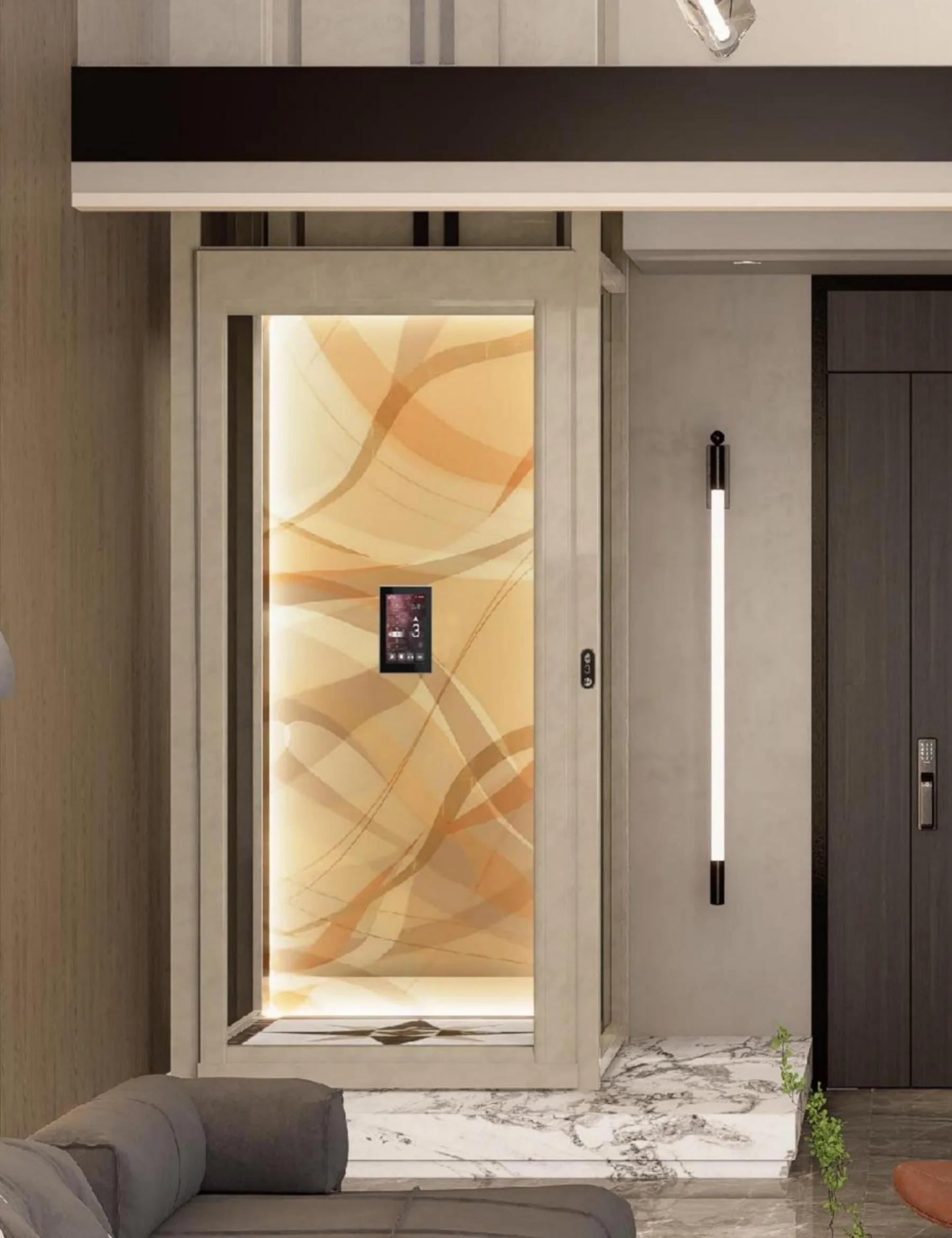
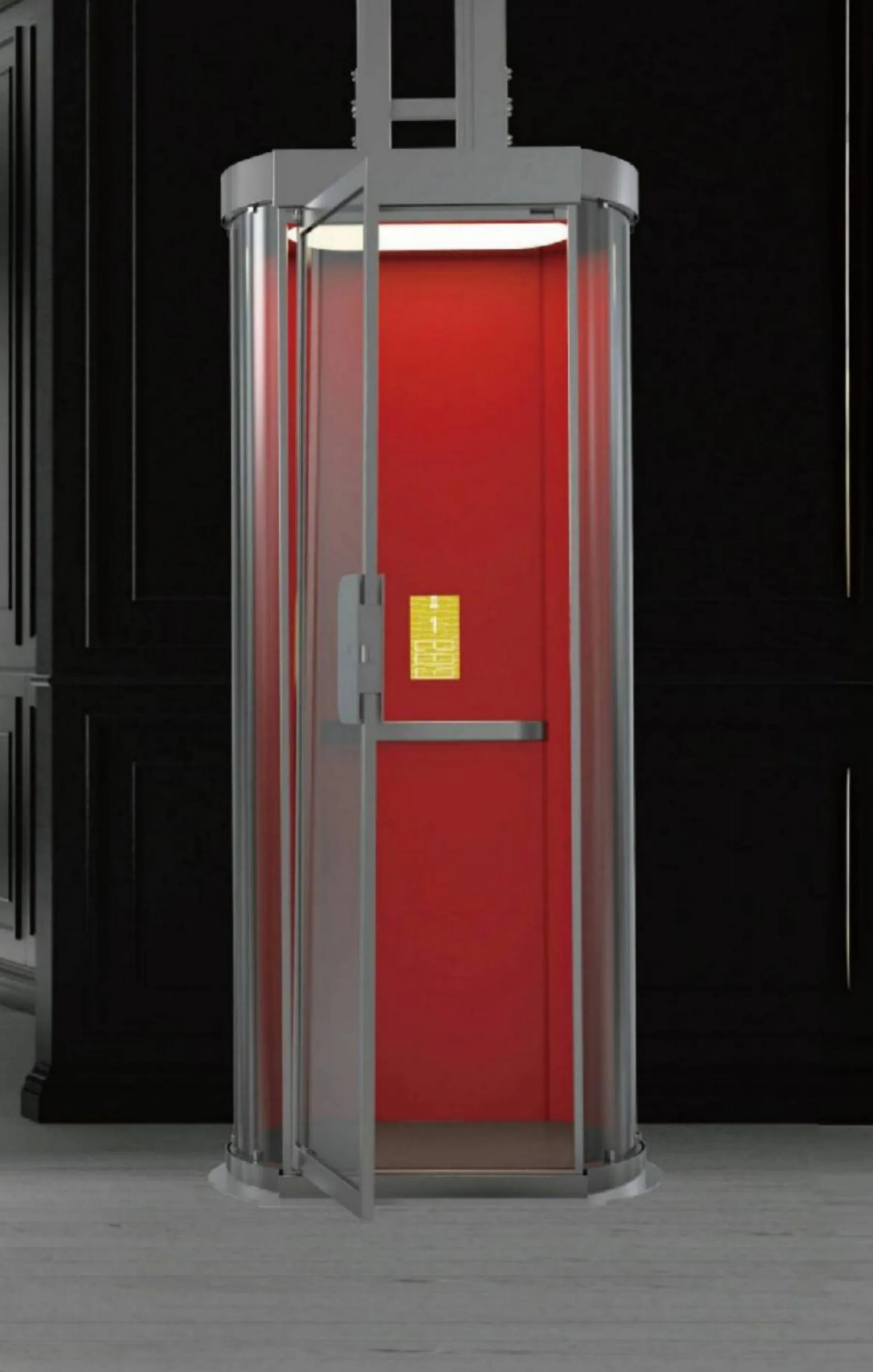
Panoramic and custom cars where the lift is part of the interior.
Other home lifts we supply
When a shaft or a pit is not possible.
Projects
Related work
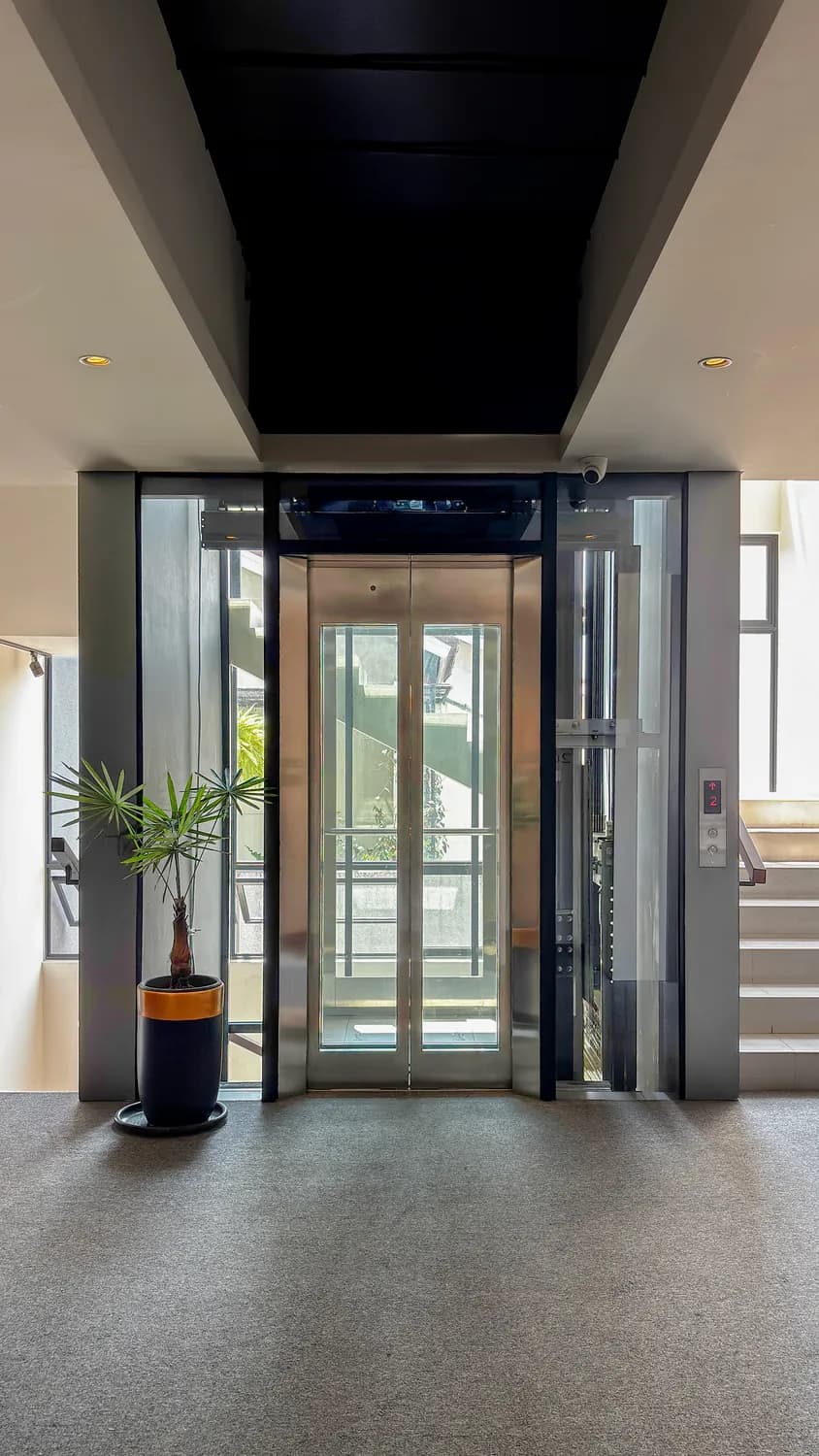
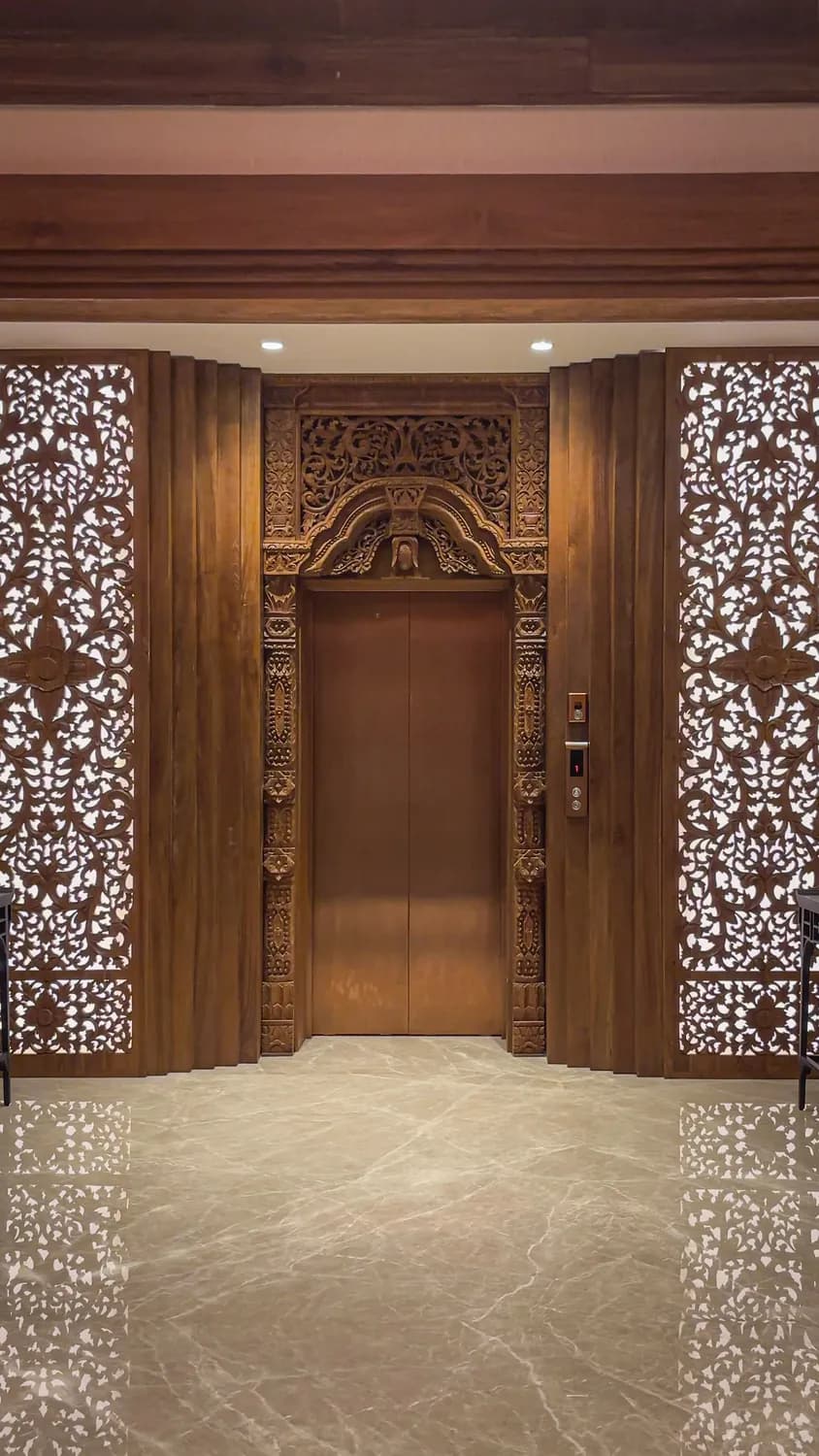
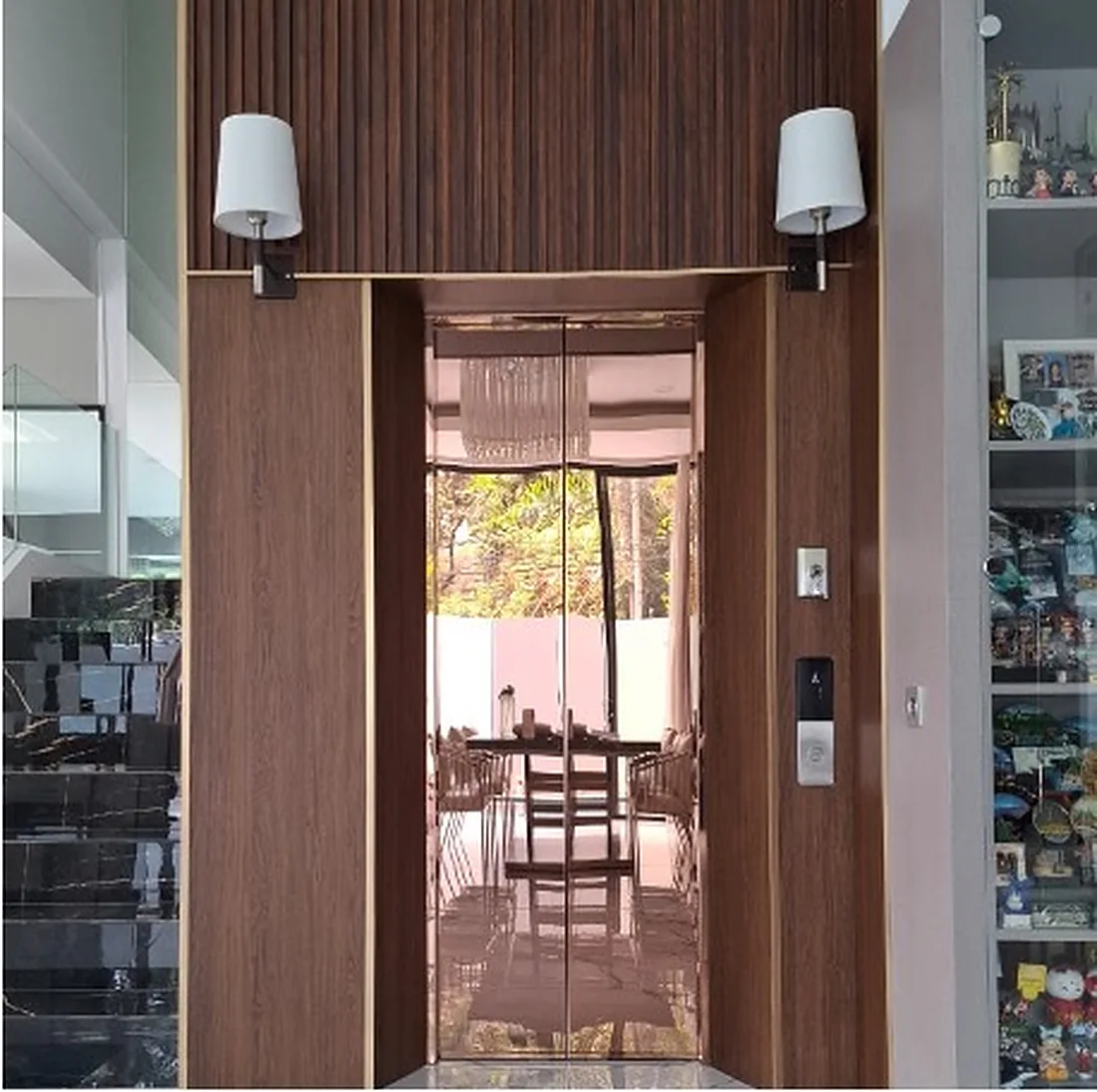
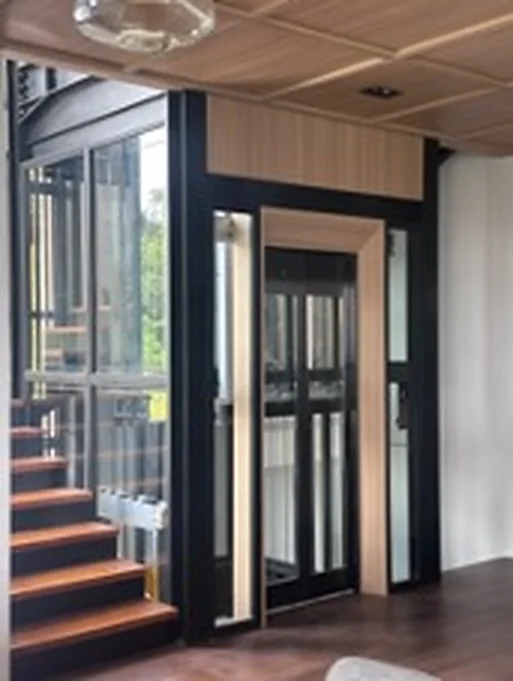
Services
Supporting services
FAQ
Common questions
Can a home lift be added to an existing house?
Usually, but it depends on structure. A survey establishes where a shaft can be formed, whether the slab and foundation can carry the loads, and what pit depth and headroom are achievable. That survey should happen before any equipment is selected.
Can I see one before buying?
Yes. A Tenkai Tsuki is installed and running at Prawita Karya's joint showroom in Solo Design Hub, Surakarta, so the ride, the car size and the finishes can be judged in person rather than from a specification. Ask and a visit can be arranged.
Why is 400 kg the usual capacity?
Because it suits an Indonesian household with room to spare. Average household size is about 3.8 people and average adult weight about 62 kg, so a typical full car is nearer 280 kg — 400 kg leaves headroom for luggage, a wheelchair and its attendant, or moving furniture. Mizu goes to 450 and 630 kg where a household needs more.
Is a traction home lift better than a hydraulic one?
For most houses, yes, though it costs more to install. Hydraulic systems are cheaper up front and simple to fit, but they need regular oil maintenance and disposal, they can leak, and ride speed and levelling drift as the oil warms up. Traction has no oil, wears slowly and uses cheaper spare parts, so the difference tends to reverse over the life of the lift. Screw and spindle systems sit between the two: quiet and pit-free, but very slow and high-wear.
What happens in a power cut?
The V300 keeps running. It is battery driven, so mains electricity is only used to charge the battery rather than to lift the car — about 250 floors of travel at full load with no supply connected at all. Charging off-peak means a time-of-use tariff can cut running cost by up to 40 per cent, and the battery can be paired with solar panels, supplied separately.
How much does a home lift cost in Indonesia?
Cost is driven by travel height, number of stops, car size, finishes and whether the shaft already exists — a retrofit into a finished house carries builder's work a new build does not. Prawita Karya quotes against a site survey rather than a list price.
How much space does a home lift need?
Far less than a commercial elevator. Tsuki works within an 800 × 900 mm shaft, needs no pit at all and 2,800 mm of overhead; Kaze needs a 150 mm pit, Mizu 200 mm, and the battery-driven V300 300 mm. Those figures are usually what makes a lift possible in an existing house — a conventional elevator pit alone would rule most out.
Backed by Prawita Karya
An own-brand lift is only as good as the company behind it.
- Supplying lifts since
- 2006
- Certified
- ISO 9001:2015 · ISO 37001:2016
- Standby technicians
- 12 cities
- Support
- 24/7 hotline
Specifying home lift for a project?
Send us the building and we will help you get the specification right before it is expensive to change.