Building type
Hospital
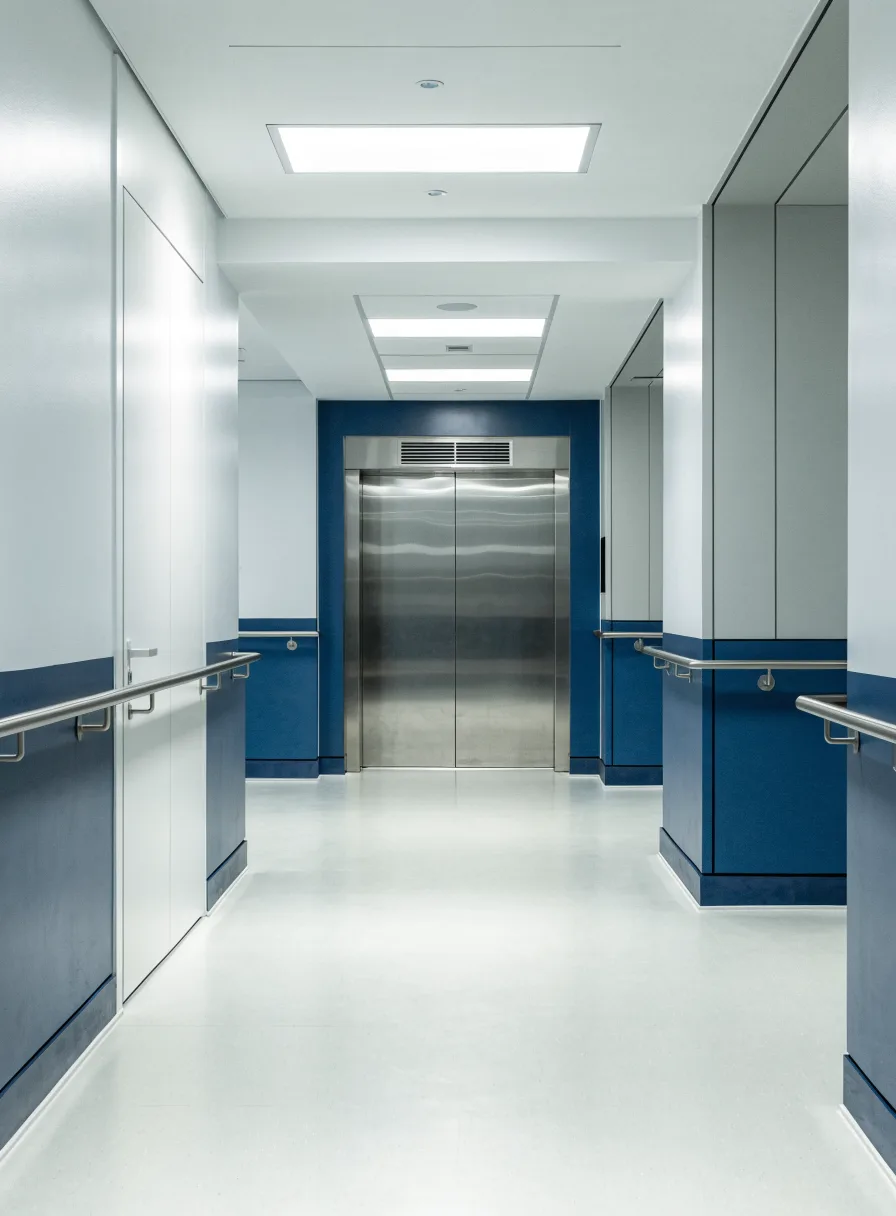
Hospital elevators must move beds, patients, staff and supplies reliably and hygienically, which makes car depth, levelling accuracy and redundancy more important than raw speed. Prawita Karya supplies, installs and maintains elevators for healthcare buildings across Indonesia.
What this building type demands
A hospital is the building type where elevator specification is closest to a clinical requirement. A bed elevator needs a car deep enough for a bed, its attendants and equipment to travel together without tilting — and a passenger elevator of identical rated load is usually far too shallow for that.
Levelling accuracy carries unusual weight here. A step at the landing that a walking passenger would never notice is a genuine hazard for a wheeled bed or a trolley of instruments, so precise stopping is a clinical concern rather than a comfort one.
Redundancy is the third requirement. Hospitals cannot suspend vertical movement while a lift is repaired, which is why healthcare buildings normally need enough units for one to be out of service without cutting a route — and why maintenance is planned around clinical activity rather than convenience.
Challenges
What makes it difficult
Beds, not just passengers
Car depth and door width must suit a bed with attendants and equipment alongside.
Levelling matters clinically
A small step at the landing is a hazard for wheeled beds and trolleys.
No acceptable downtime
Clinical routes must survive a unit being out of service.
Infection control
Car finishes and fixtures need to tolerate frequent cleaning.
Separated flows
Patient, visitor and service traffic often need to be kept apart.
Solutions
How we address it
- Bed and stretcher elevators sized for clinical use
- Passenger elevators for visitor and outpatient traffic
- Service and goods elevators for supplies and waste
- Cleanable car finishes and fixtures
- Maintenance planned around clinical activity
- 24/7 emergency response


Products
Equipment for this building type

Services
Supporting services
FAQ
Common questions
What is the difference between a hospital bed elevator and a passenger elevator?
A bed elevator has a much deeper car so a bed, its attendants and equipment can travel together without tilting, with door widths and levelling specified for rolling loads. A passenger elevator of the same rated load is usually too shallow, because rated load describes weight, not floor plan.
How many elevators does a hospital need?
Enough that clinical routes survive one unit being out of service, which usually means separating bed, visitor and service traffic rather than sizing a single group. The number follows from a traffic analysis based on bed count, departmental layout and floor population.
How is maintenance handled in a working hospital?
Planned around clinical activity, so that units are taken out of service when the routes they serve are least critical, with the work sequenced to keep alternatives available.
Planning vertical transport for a hospital project?
Tell us about the building and our engineers will help you specify equipment that suits how it will actually be used.