Building type
Residential
Private homes and villas use compact home lifts sized for light, intermittent duty, usually installed for accessibility or as an architectural feature. Prawita Karya supplies and installs home lifts across Indonesia.
Will a lift fit in your house?
Send us a photo and the size of the space. Our engineers check for free.
What this building type demands
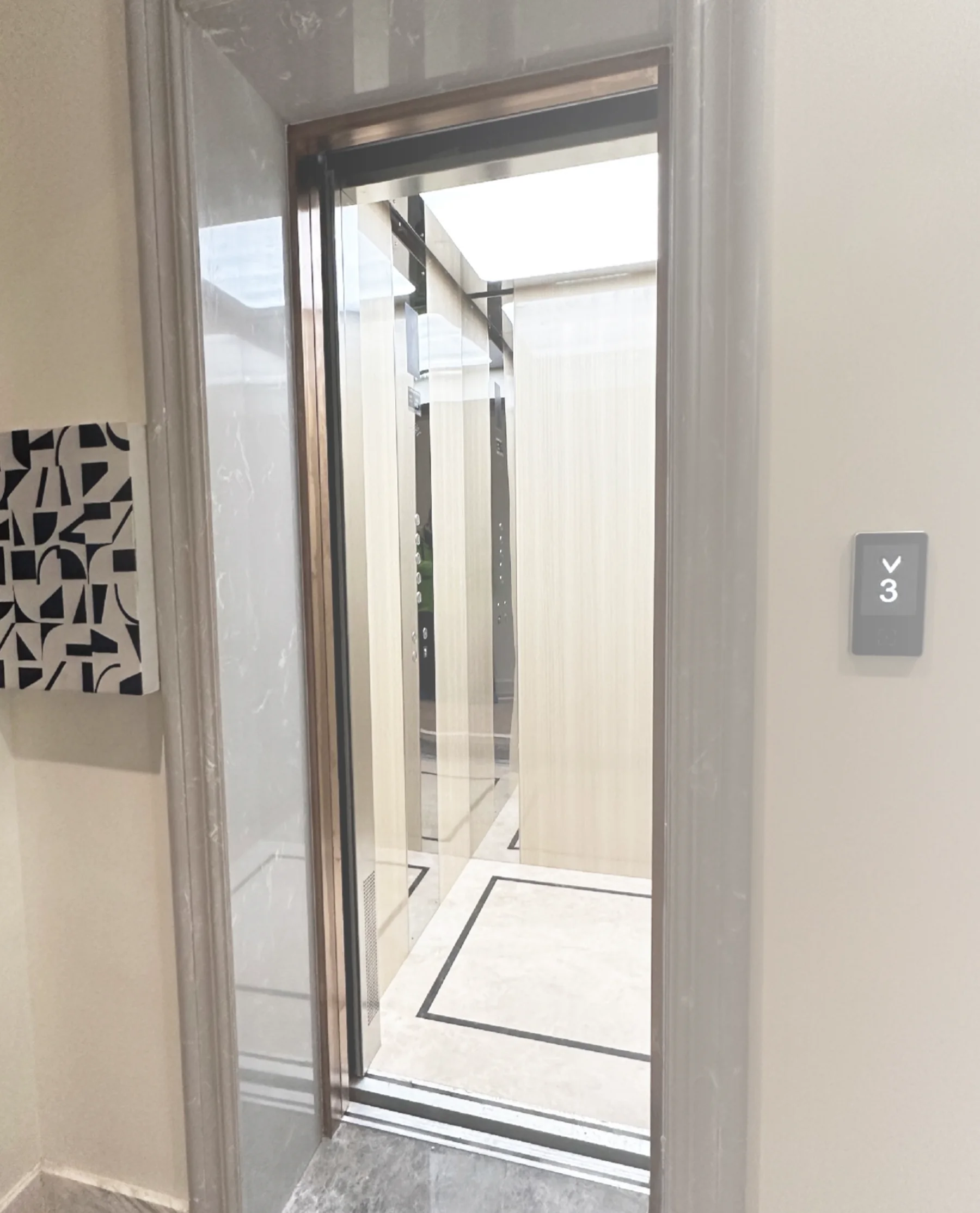
A home lift is specified for light domestic duty rather than scaled down from a commercial elevator, which is what allows a smaller shaft footprint, shallower pit and lower headroom — frequently the difference between a lift being possible in an existing house and not.
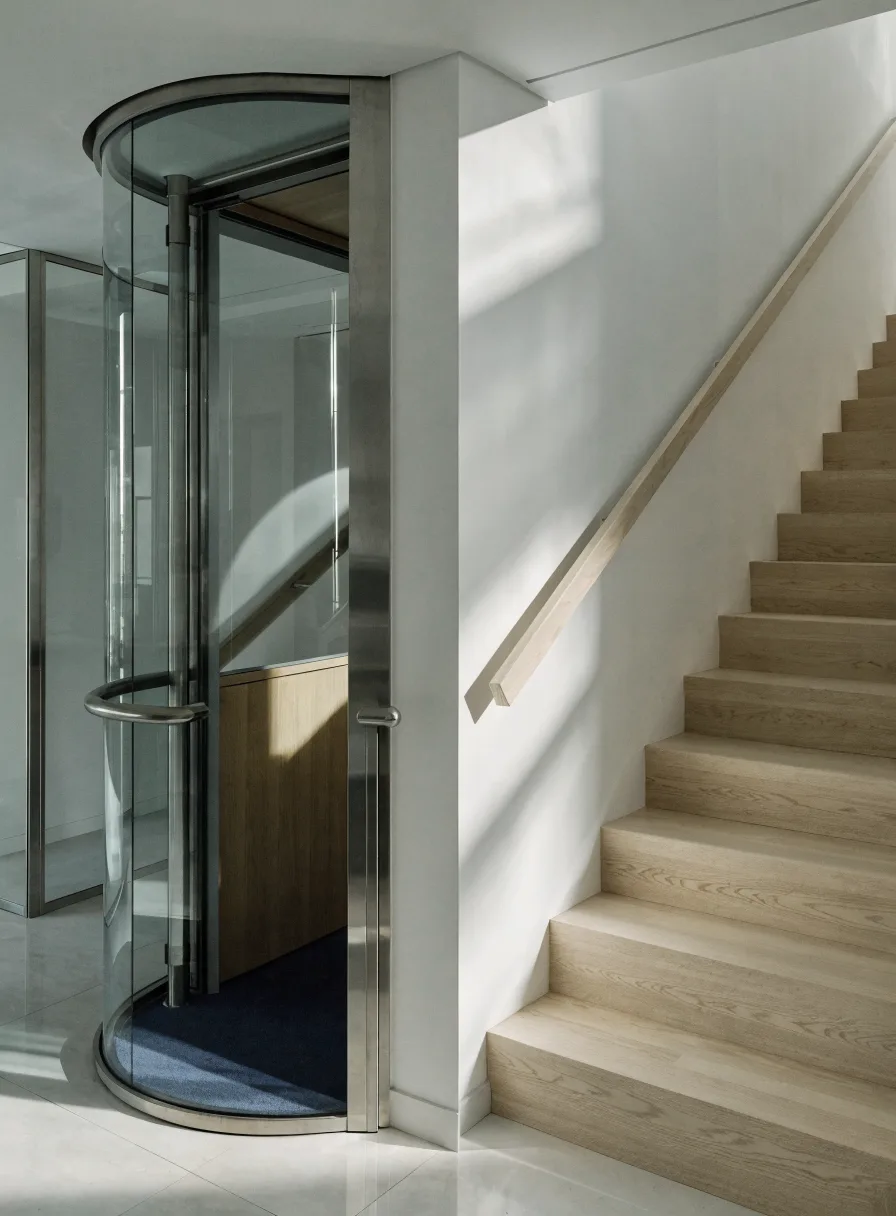
Most installations answer one of two needs. Accessibility is the common one: multi-storey living becomes difficult with age, injury or reduced mobility, and a lift keeps the upper floors of a house usable rather than forcing a move. The other is architectural, where a panoramic car is treated as part of the interior.
Retrofits are usually feasible but structurally constrained. Where a shaft can land, what the slab beneath can carry, and how much pit and headroom are available are site questions rather than catalogue ones, which is why the survey comes before equipment selection.
Challenges
What makes it difficult
Structure decides feasibility
Shaft position, slab capacity, pit and headroom govern what is possible.
Retrofit builder's work
Adding a shaft to a finished house carries work a new build does not.
Part of the interior
The lift is visible domestic architecture, not plant.
Long, light duty
Infrequent use over many years, with servicing easy to forget.
Solutions
How we address it
- Compact home lifts for houses and villas
- Panoramic cars where the lift is an architectural feature
- Site survey before equipment selection
- Accessibility-focused specification
- Maintenance programmes for domestic installations
- Technical support and spare parts
Projects
Related work


Services
Supporting services
FAQ
Common questions
Can a home lift be installed in an existing house?
Usually, subject to structure. A survey establishes where a shaft can be formed, whether the slab and foundations can carry the loads, and what pit depth and headroom are achievable. That survey should precede any equipment selection.
Is a home lift worth installing for accessibility?
It is the most common reason. Where the alternative is leaving upper floors unused or moving house entirely, a lift keeps an existing home usable as circumstances change.
Does a home lift need regular maintenance?
Yes. Domestic use is light and intermittent, which makes servicing easy to overlook, but the safety devices and door equipment still require periodic inspection and adjustment.
Planning vertical transport for a residential project?
Tell us about the building and our engineers will help you specify equipment that suits how it will actually be used.