Building type
Shopping Mall
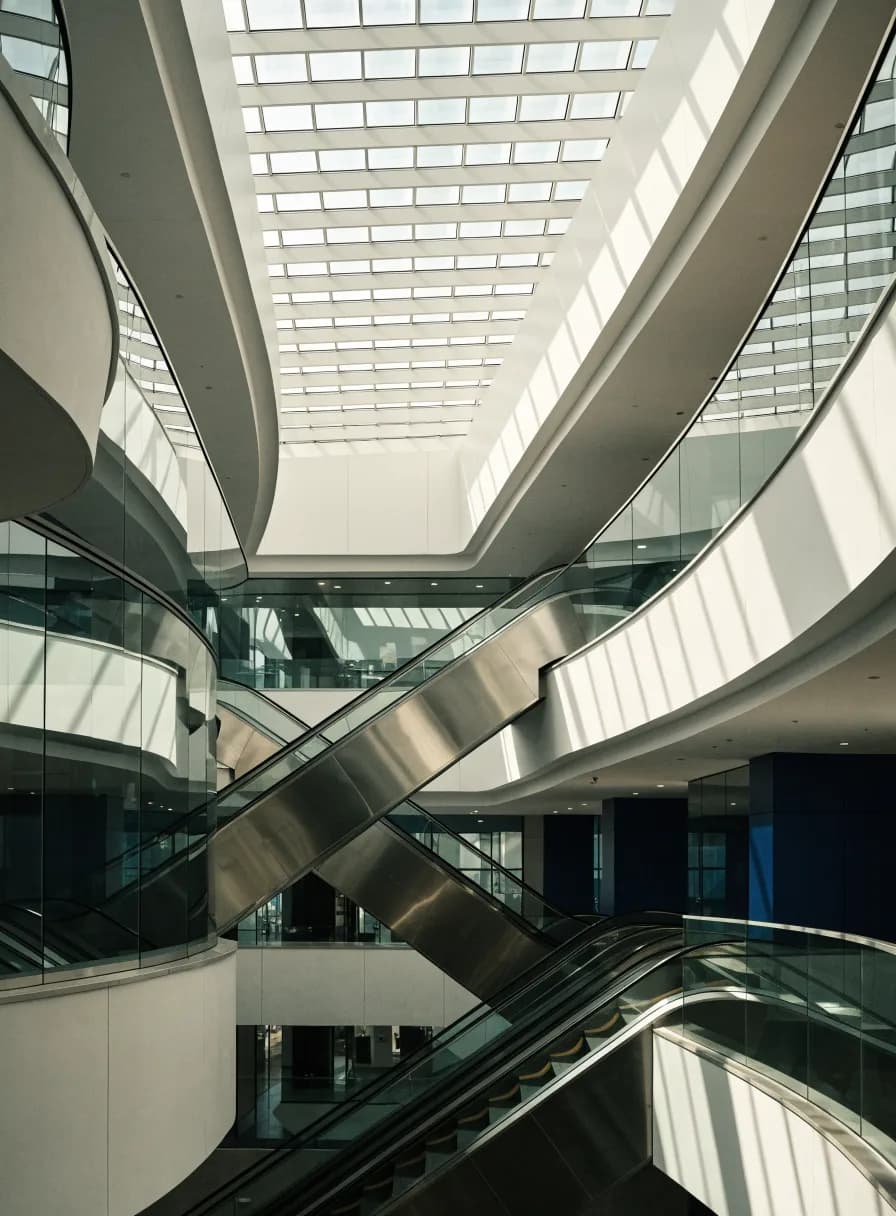
Shopping malls rely primarily on escalators to move a continuous flow of shoppers between levels, supported by passenger and goods lifts for accessibility and deliveries. Prawita Karya supplies and maintains both across Indonesia.
What this building type demands
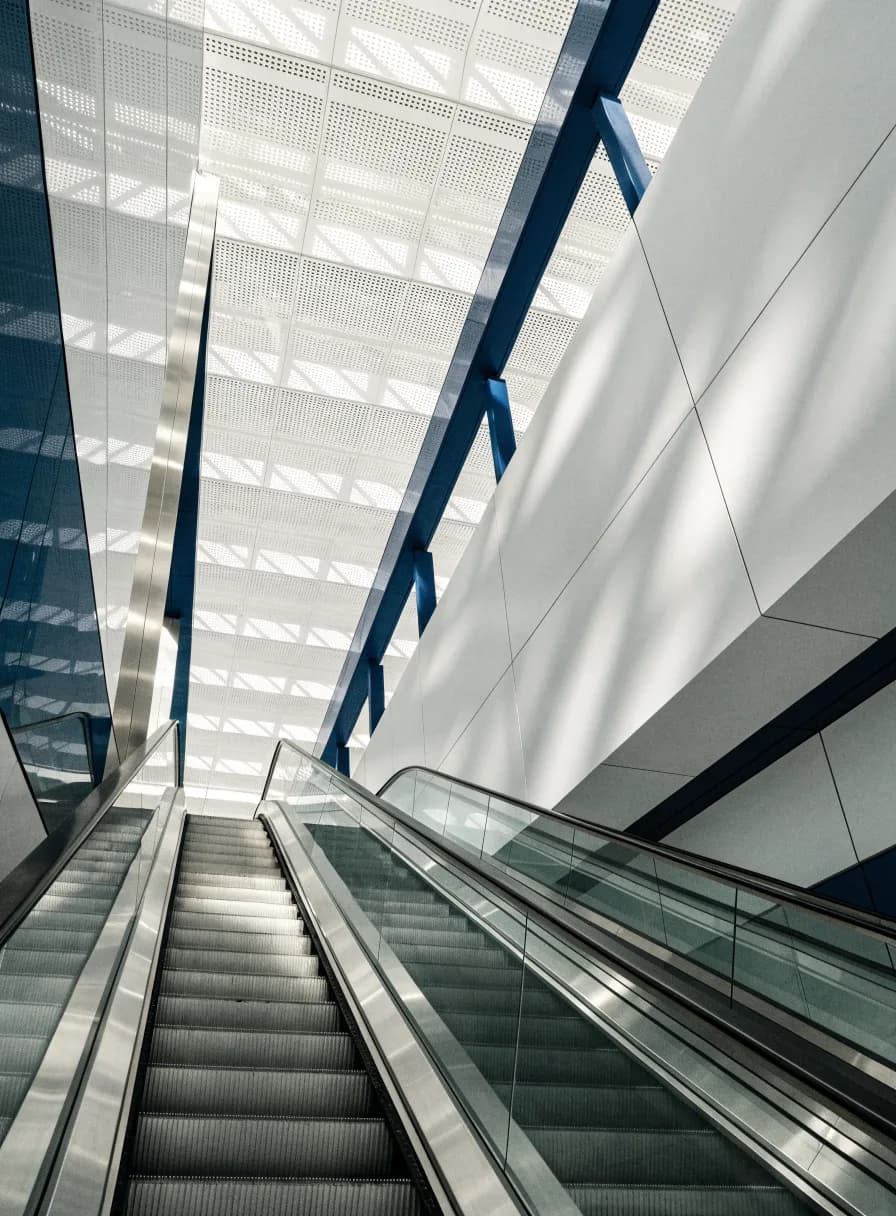
Retail is the building type where escalators do most of the work. A mall needs to move a steady stream of people between levels without asking anyone to wait, and an escalator does that where a lift group of equivalent capacity would be impractical and far more expensive.
The consequence is continuous duty. Escalators run for the whole trading day, every day, so step chains, handrails, combs and brakes accumulate wear steadily — and servicing has to be scheduled around trading hours rather than deferred.
Malls also need what the escalators cannot provide: accessible lifts for shoppers who cannot use them, goods lifts serving tenant units and waste routes, and inclined moving walks where shoppers move trolleys between levels.
Challenges
What makes it difficult
Continuous running
Escalators operate throughout trading hours, accumulating steady wear.
Servicing around trading
Work must fit outside opening hours to avoid closing a route.
Accessibility alongside
Lifts must serve shoppers who cannot use an escalator.
Tenant and waste logistics
Goods movement needs routes separate from shoppers.
Solutions
How we address it
- Escalators specified for continuous retail duty
- Inclined moving walks for trolley transport
- Passenger elevators for accessibility
- Goods elevators for tenant deliveries and waste
- Scheduled maintenance outside trading hours
- Escalator spare parts including step chains and handrails
Products
Equipment for this building type
Services
Supporting services
FAQ
Common questions
Why do malls use escalators rather than more elevators?
Because an escalator moves a continuous stream with no wait, which suits retail footfall. Achieving the same throughput with lifts would require a large group, take more floor area, and still make shoppers wait — which shoppers browsing between levels tolerate poorly.
How is escalator maintenance scheduled in a trading mall?
Outside trading hours wherever possible, so a route is not closed during opening. Because escalators run continuously, the interval is set against running hours and footfall rather than left until a fault appears.
What is an inclined moving walk?
A moving walk on a gentle incline with a flat surface rather than steps, which lets shoppers move between levels while keeping a trolley with them. It is common in malls with supermarket anchor tenants.
Planning vertical transport for a shopping mall project?
Tell us about the building and our engineers will help you specify equipment that suits how it will actually be used.